

It Started With One Tipi
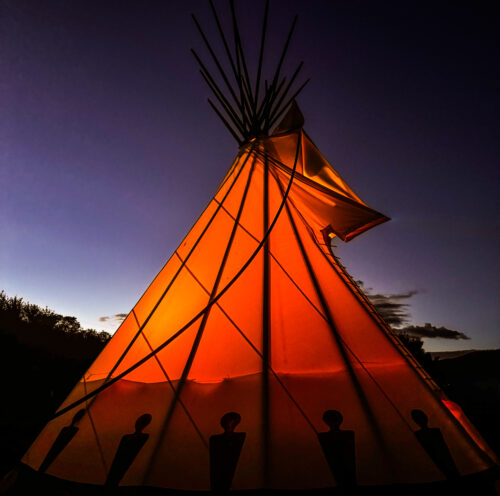 Heather C. Gomez, an enrolled member of the Jicarilla Apache Nation, grew up in Dulce and knew two things about it at the same time. She knew how beautiful and unique her community was. She also knew most outsiders had heard almost nothing about the Jicarilla Apache Nation beyond the UFO stories.
She saw an opening in that gap. Dulce Base Tipi welcomed its first guests in 2023 through Airbnb, and what began as one tipi and a simple idea has grown into three tipis, cultural tours, traditional Jicarilla Apache stew and frybread, and wellness retreats. A fourth tipi is coming for the 2027 season.
“More than anything, I want guests to leave with a better understanding and appreciation of the Jicarilla Apache people and the place we call home.”
A Second Business, A Different Trade
Big D Flooring LLC could hardly be further from tipi hospitality, and it came about for a practical reason. Heather’s fiancé, Dustin, has more than fifteen years of experience installing flooring. When he moved to the Jicarilla Apache Nation, there was no local work in his trade, which meant long distances to job sites or starting something of their own.
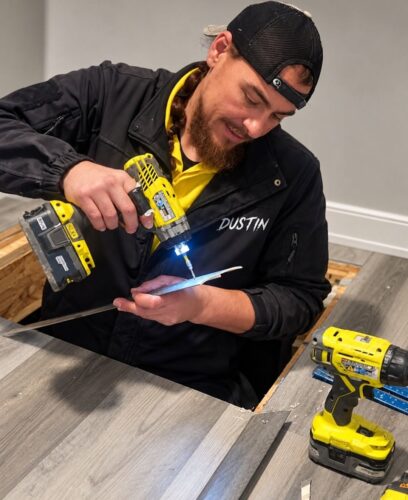
They started something of their own, and they saw a real need in the process. Reliable flooring service was hard to come by across the rural communities of northern New Mexico and southwestern Colorado. Dustin leads installations and manages projects. Heather handles operations, marketing, customer relationships, and the administrative side, pairing his trade expertise with her background in business and marketing.
Dulce Base Tipi is seasonal, which helps her balance the two. The rest is discipline.
“Being an entrepreneur means wearing a lot of hats, and I’ve gotten pretty good at switching between them.”
From the Newsroom to the Business
Before either business, Heather spent years in journalism, media, communications, graphic design, and marketing, including a run as Editor of the Jicarilla Chieftain. She describes that work as the foundation for everything since: storytelling, community engagement, and an understanding of how much it matters who is doing the telling.
“I understand how important it is for Native people to tell our own stories rather than have others tell them for us.”
That conviction runs straight into how she operates Dulce Base Tipi. Branding, photography, and digital marketing are skills she already had, and she used them to build both businesses from the ground up.
“I’m not just marketing a place to stay. I’m sharing a story, creating an experience, and helping people see our community through a different lens.”
How She’s Funding It
Heather is direct that funding has required creativity. A $10,000 equity-free grant through the Embark Program in 2024, a partnership between Founded Outdoors and REI Path Ahead Ventures, was the milestone that took Dulce Base Tipi from one tipi to three. In 2026, Big D Flooring received an $8,000 grant through the Regional Development Corporation’s Tribal Grant Program, which purchased an enclosed trailer for hauling materials and equipment to job sites.
The rest has come from reinvested revenue, partnerships, and their own labor. Grants helped, but she is clear they were never the whole picture, and that relationships, consistent marketing, and diversifying services carried just as much weight.
“I’ve learned to look for resources and funding opportunities that align with my long-term business goals rather than relying on one source of funding.”
What the Growth Capital Program Changed
Heather came through NACIA’s 2025 Growth Capital Program cohort, and her takeaway reframed what she thought the problem was.
“Growing a business isn’t just about getting access to money. It’s about being prepared for growth and knowing what type of funding makes sense for your business.”
Entrepreneurs get pulled so far into daily operations, she notes, that the bigger picture goes unexamined. The program pushed her to think strategically about funding, financial readiness, and long-term sustainability, and reinforced something she now names often: the value of a network of people who understand where you are trying to go.
The UFO Question
Dulce has been tied to UFO lore, underground base legends, and unexplained phenomena for decades. It is a kind of fame the community never asked for, and Heather made a decision about it that a lot of founders would have hesitated over. Rather than ignore the interest, she built an experience around it.
The UFO Night Tour takes guests out into the landscape to hear the legends and the history that made Dulce known in paranormal circles. She enjoys the storytelling, and she is careful to draw the distinction plainly, that legends and speculation are not established facts.
What she is really doing is using the curiosity as a door.
“People may initially discover us because of UFOs or Bigfoot, but I want them to leave knowing there’s much more to our community than those stories.”
Where She Draws the Line
Cultural tourism raises a question most businesses never have to answer, which is what gets shared and what does not. Heather takes it seriously as an enrolled member of the Nation.
“There’s a difference between sharing our culture and exposing things that aren’t meant for the public.”
What she shares is community history, the landscape, hospitality, food, and the stories appropriate for visitors. Certain cultural knowledge, ceremonies, traditions, and places stay within the community. Her line on it is short and worth repeating: not everything needs to become a tourism experience.
She holds a second principle alongside the first, that cultural tourism should benefit the people whose culture is being shared. Wherever she can, she collaborates with local artists, entrepreneurs, and community members. The whole approach, in her words, comes down to sharing with respect, protecting what matters, and keeping the experience authentic.
What a Win Looks Like
 By her own account, 2026 has already delivered. Dulce Base Tipi kept growing, launched its first Enchanted Spirit Women’s Wellness Retreat in partnership with The Enchanted Collective of San Diego, expanded its retreat offerings, and was featured in New Mexico Magazine. Big D Flooring completed projects across the region and invested in equipment that lets it take on more work. She also began working with aspiring Native entrepreneurs through WESST’s Native Women Rising program.
But the win she names as the biggest is not on that list. It is what the businesses prove about where they are.
“If my businesses can inspire another Jicarilla Apache person to start something of their own, bring more positive attention to our community, or create economic opportunities locally, that’s a win to me.”
“Success isn’t always measured in dollars. Sometimes it’s measured by the doors you open for yourself and others.”
Her Advice to Other Native Founders
“Start with what you have, and don’t wait for everything to be perfect.”
She means it literally. When she started Dulce Base Tipi she had one tipi. Not three, not the retreats, not the tours. An idea, a vision, and the determination to make it work.
She does not minimize what building in a rural or reservation community costs, particularly around access to funding, resources, and business support. But she argues the strengths get overlooked just as consistently. Founders in these communities know their communities, understand what they need, and bring perspective that makes a business distinct. Her practical advice follows from that: use the business development programs, apply for the grants, build the network, and put yourself out there.
“Don’t underestimate what you can build from where you are. You don’t have to leave your community to create something successful.”
What’s Next
The fourth tipi arrives for the 2027 season, which will let Dulce Base Tipi host larger groups and grow its retreat capacity. More Enchanted Spirit Women’s Wellness Retreats are planned, along with the Returning to the Root Indigenous Women’s Healing Retreat, running August 19 to 22, 2027, in partnership with Juniper and Pine Consulting of Alaska. Heather is especially looking forward to that one, describing it as a space for Indigenous women to gather around healing, cultural connection, reflection, and growth.
Big D Flooring is focused on growing its customer base and extending its reach further across northern New Mexico and southwestern Colorado.
Her work outside the two businesses is expanding too. She is continuing her consulting with WESST’s Native Women Rising program, and hopes to facilitate more workshops with the IDRS Acorn Project in tourism, Airbnb hosting, and small business development, areas where she has learned a great deal by doing. She also serves as Community Engagement Manager for the Jicarilla Apache Nation Geothermal Feasibility Study, work she describes as a blessing for the chance it gives her to meet with tribal members, hear their perspectives, and be part of conversations about the Nation’s future.
There is a personal milestone in 2027 as well. Heather and Dustin are getting married next summer, which makes the year ahead a full one on both fronts.
All of it, she says, points the same direction: grow the businesses, do work she cares about, and create opportunity at home.
Why This Matters to NACIA
Heather came out of the 2025 Growth Capital Program cohort with a sharper answer to a question most founders never stop to ask, which is not how to get money but what kind of money actually fits the business she is building. She is now doing for other Native women what the program did for her. That is the whole point.
Learn more about the Growth Capital Program: https://nacia.com/apply.
This is issue three of the NACIA Founder Series.